India's Online Gaming Law Explained: What's Banned, What's Legal, and What the December 2 Court Hearing Could Change
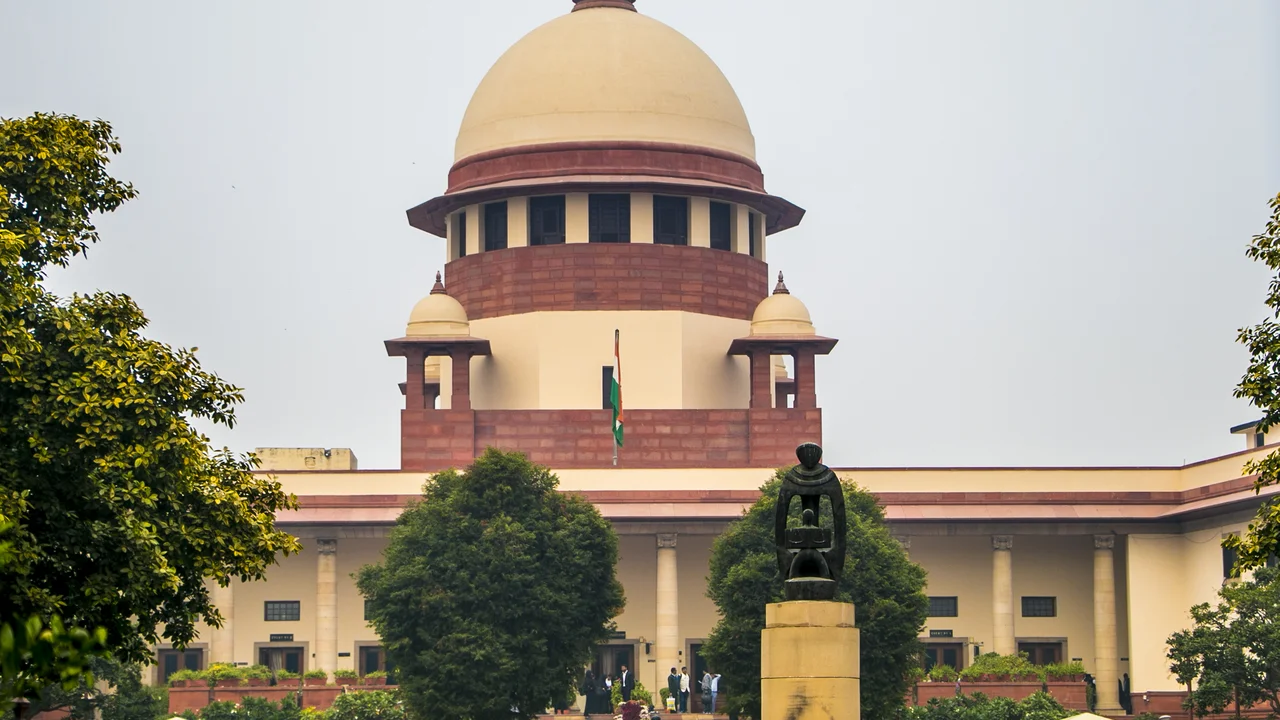
If you play games in India, one law now decides what you can and cannot do with money in a game. The Promotion and Regulation of Online Gaming Act, 2025 — the PROG Act — has been in force since May 1, 2026. It bans every online game played for money, recognises esports as a sport, and created a new regulator. On December 2, 2026, the Supreme Court hears a challenge that could change parts of it. This guide explains the law in plain language: what is banned, what is legal, what it means for the games you actually play, and what to watch for on December 2. This is general information, not legal advice.
Quick summary
- The PROG Act, 2025 came into force on May 1, 2026. It bans all online money games — any game where you pay or stake money expecting a monetary return — whether the game is based on skill, chance or both.
- Playing is not a crime under the Act. The penalties target operators, advertisers and payment processors: up to 3 years in jail and a ₹1 crore fine for offering a money game, up to 2 years and ₹50 lakh for advertising one.
- BGMI, Free Fire, Valorant, Fortnite and other esports titles are legal and promoted — the law treats esports as a sport, though each esports title must be registered with the new regulator.
- Real-money apps that claim to be "licensed" or "registered" are misrepresenting the law. There is no registration route for any online money game.
- The Supreme Court hears a challenge to the ban on December 2, 2026 (Head Digital Works v Union of India). The hearing is not a stay — the ban stays in force until the court rules.
- Dream11, MPL, WinZO, Zupee and PokerBaazi have all shut their real-money operations. The industry was worth around ₹31,000 crore at its peak.
What exactly does the law ban?
The Act splits online gaming into three categories, and only one of them is banned:
| Category | What it is | Legal status |
|---|---|---|
| Online money games | Any game where you pay money or stake value expecting a monetary return | Banned — offering, advertising or processing payments for it is a criminal offence |
| E-sports | Competitive, skill-based games played as a sport | Promoted — must be registered with the regulator |
| Online social games | Casual and recreational games with no money staked | Allowed — registration only if the government notifies the category |
The key point is the test the law uses. Before this Act, Indian courts drew a line between games of skill (like rummy and fantasy sports, which were protected) and games of chance (which were gambling). The PROG Act throws that line away. The test is now the stake: if you put money in expecting money back, it is an online money game — and it is banned. Skill does not save it.
Three sections do the work:
- Section 5 prohibits offering, aiding or inducing any online money game.
- Section 6 prohibits advertising or promoting one — including bonuses and offers.
- Section 7 prohibits banks, UPI rails and payment gateways from processing transactions for one. In practice, UPI payments to these platforms fail, get reversed or get blocked.
Who can be punished — and what about players?
The penalties fall on the supply side, not on you as a player:
| Role | What is prohibited | Maximum penalty |
|---|---|---|
| Operator | Offering a money game (Section 5) | Up to 3 years in jail and/or fine up to ₹1 crore |
| Advertiser / promoter | Advertising a money game (Section 6) | Up to 2 years in jail and/or fine up to ₹50 lakh |
| Bank / payment provider | Processing payments for a money game (Section 7) | Penalties under the Act and related law |
| Player | Simply playing | No penalty under this Act |
That last row matters, but do not read it as "players are safe". The Act does not punish you for playing, but you still face real risks: money deposited on a banned platform can be lost, your bank account can be frozen if it is linked to these transactions, state gambling laws can still apply, and any winnings would carry tax problems. And if you use an offshore betting site, there is no Indian regulator to turn to when it refuses to pay out — your money is simply gone.
What happened to the big real-money apps?
The ban hit fast. Dream11, once valued at $8 billion, shut its money-game operations. MPL, WinZO, Zupee and PokerBaazi followed, pivoting away from real-money play. The industry at its peak was worth around ₹31,000 crore a year, and the companies challenging the ban say more than 200,000 jobs and that entire revenue pool are at risk.
The government's reasoning was about harm, not tax. It cited an estimated ₹20,000 crore a year drained from ordinary people through these games, plus addiction and loss of life. That is why the law bans rather than licenses: unlike the UK or some US states, India chose prohibition, and there is no licence you can buy to run a real-money game legally.
The timeline, from bill to enforcement:
- 20–22 August 2025: Parliament passes the Act; the President gives assent on August 22.
- 8 September 2025: Challenges filed in three High Courts are transferred to the Supreme Court.
- 22 April 2026: The Online Gaming Rules, 2026 are notified — 26 rules that set up the regulator and the procedures.
- 1 May 2026: The Act and the Rules come into force. Real-money lobbies go dark.
- 27 May 2026: The Supreme Court rules on the older Tamil Nadu and Karnataka online gaming bans and on a retrospective 28% GST demand.
- 5 August 2026: The court agrees to give the challenge a final hearing.
- October 2026: Review petitions against the May judgment are dismissed.
- 2 December 2026: The main hearing is listed before a bench led by Chief Justice Surya Kant.
What is the Online Gaming Authority of India?
The Act creates a new regulator, the Online Gaming Authority of India (OGAI), under the Ministry of Electronics and IT (MeitY), headquartered in Delhi. Its jobs are:
- Decide what counts as a money game, using a five-factor test: whether a fee or deposit is required, whether a monetary return is expected, what the fee does, how rewards work and whether they can be used outside the game, and how the platform makes money. It has 90 days to decide each case.
- Register esports titles — registration is mandatory for games offered as esports, and each game needs its own registration. The publisher applies, not the player. On July 29, 2026, Minister of State for Electronics and IT Jitin Prasada confirmed this in the Lok Sabha.
- Register online social games in categories the government notifies, looking at harm to users (including children), scale of use, value of money transactions and the provider's country of origin.
- Handle complaints and appeals, and enforce the law — including suspending or cancelling a registration, or banning a game from being offered for a set period. Registration certificates last up to ten years.
One important rule: an online money game can never be registered or recognised as an esport. So if an app shows you a "licence" or "registration number" for a real-money game, it is misrepresenting its legal status.
Registration has been slow. As of September 2026, the process was still ramping up, and the government has not published a full list of registered esports titles. If you are a competitive player, that is worth knowing — but it does not change what you can play. The registration duty sits with publishers, not players.
What does the law mean for the games you actually play?
For most GameDrop readers, the practical answer is simple: your games are fine.
- BGMI, Free Fire, Valorant, Fortnite, CS2, EA FC and similar titles are esports or social games. You can play them, compete in them and stream them. Our guide to fixing lag in BGMI on a low-end phone and our Valorant settings guide for low-end PCs are unaffected by the law.
- Tournaments with prize money are still possible — prize money from a competition is not the same as staking money to win money, and esports is a promoted category. What is banned is the "pay to enter, win cash" model where your stake is the product.
- Free-to-play games are untouched. If no money is staked for a return, the ban does not apply. Our guide to the best free games of 2026 is all games you can play without spending a rupee.
- In-game purchases are not money games. Buying a skin, a battle pass or a character is a purchase, not a stake. The ban targets games where you pay expecting to win money back.
- What changed is the fantasy-sports and rummy ecosystem. Dream11's money contests, poker apps and rummy platforms are gone from the legal market. If an app offers you a cash contest in India today, it is operating outside the law.
If you are buying a phone to play on, the law does not change your choice — our guide to the best gaming phones under ₹20,000 still applies, and BGMI and Free Fire remain the games those phones are built to run.
What happens on December 2, 2026?
The Supreme Court hears the main challenge — Head Digital Works v Union of India, Transferred Case (Civil) No. 133 of 2025 — on December 2, before a bench led by Chief Justice Surya Kant, with Justices Joymalya Bagchi and V. M. Pancholi.
The lead petitioner is Head Digital Works, the company behind A23 Rummy. It asked for an urgent hearing on November 19, and the court agreed to list it. Its arguments:
- The blanket ban fails to distinguish games of skill from games of chance, which decades of Indian court judgments protected.
- The ban violates Article 19(1)(g) of the Constitution — the right to practise a profession, trade or business — and Article 14, the right to equality, because it treats online skill games worse than the same games played in physical form.
- Shutting licensed domestic platforms has handed Indian players to unlicensed offshore operators, which keep expanding while Indian companies stay closed.
The case is consolidated with petitions from Clubboom11 Sports & Entertainment and Bagheera Carrom. What the December 2 hearing will not do is reopen real-money apps overnight. A listed hearing date is not a stay, and the ban remains fully in force unless and until the court rules otherwise. The court has also said it may not have time for a detailed hearing in December, so the case could run on into 2027.
What to watch for after the hearing: whether the court asks the government to respond in detail, whether it clubs the case with the earlier judgments, and whether it signals anything about the skill-versus-chance question. If the court eventually strikes the ban down, skill-based games could return under regulation. If it upholds it, the ban is settled law and the focus shifts to enforcement against offshore sites.
What should you do if you have money stuck on an app?
If you deposited money on a real-money platform before or after the ban, act quickly:
1. Stop depositing immediately. Do not chase losses on a platform that is now illegal to operate.
2. Screenshot everything — your balance, deposit history, transaction IDs and any messages from the platform.
3. Contact your bank and ask about a chargeback or reversal for the transactions. Banks have been instructed not to process these payments, and a reversal is more likely if you act fast.
4. File a complaint on the National Cybercrime Reporting Portal (cybercrime.gov.in) and with the platform through the OGAI / MeitY grievance route.
5. Do not trust "recovery agents" who promise to get your money back for a fee. That is a second scam built on the first.
Frequently asked questions
Is playing BGMI legal in India?
Yes. BGMI is an esports title, and esports is a promoted category under the PROG Act — not a banned one. The ban covers games where you stake money expecting a monetary return. Playing BGMI, competing in tournaments and streaming it are all legal. The registration duty for esports titles sits with the publisher, not with players.
Can I play rummy or fantasy sports for money in India now?
No. The PROG Act bans all online money games, including skill-based ones like rummy and fantasy sports. Dream11, MPL, WinZO, Zupee and PokerBaazi have all shut their real-money operations. Any app offering cash rummy or cash fantasy contests in India today is operating outside the law.
Will the Supreme Court hearing on December 2 bring back real-money gaming?
Not by itself. The December 2 hearing is the start of the court's consideration of the challenge, not a ruling — and it is not a stay on the ban. Real-money games stay banned unless and until the court strikes the law down or the government changes it, which would take months at the earliest.
Are esports tournaments with cash prizes legal?
Prize money from a competition is not the same as staking money to win money, and esports is a category the law promotes. Tournaments run by publishers or organisers, with prizes funded by sponsors rather than entry stakes, are the model the law envisages. What is banned is the "pay money, win money" loop.
I see an app claiming it is "government registered" for real-money games. Is it legal?
No. There is no registration route for any online money game under the PROG Act — registration exists only for esports and for notified categories of online social games. An app displaying a licence or registration number for a real-money game is misrepresenting its legal status. Do not deposit money on it.
Related articles
 Best Games for 16GB RAM PC: The AAA Games…
 Best Gaming Phones Under ₹20,000 in India…
 How to Increase FPS in Any Game: The Comp…
 GTA 6 Crashing on PS5? How to Fix Error C…
The Gaming Diary — India Online Gaming Law 2026: PROG Act and Esports Rules
Legal500 — TechTicker Issue 77: Online Gaming Rulebook Arrives
RTI Wiki — India's Online Gaming Law 2026: What It Bans
Sigma World — India's apex court to examine online gaming ban
Virlan — India Supreme Court A23 Ban Challenge Set for Dec 2 Hearing
RHDRI — Online Gaming Act 2025: What It Means for Bonus Offers
Hero image: Subhashish Panigrahi via Wikimedia Commons.